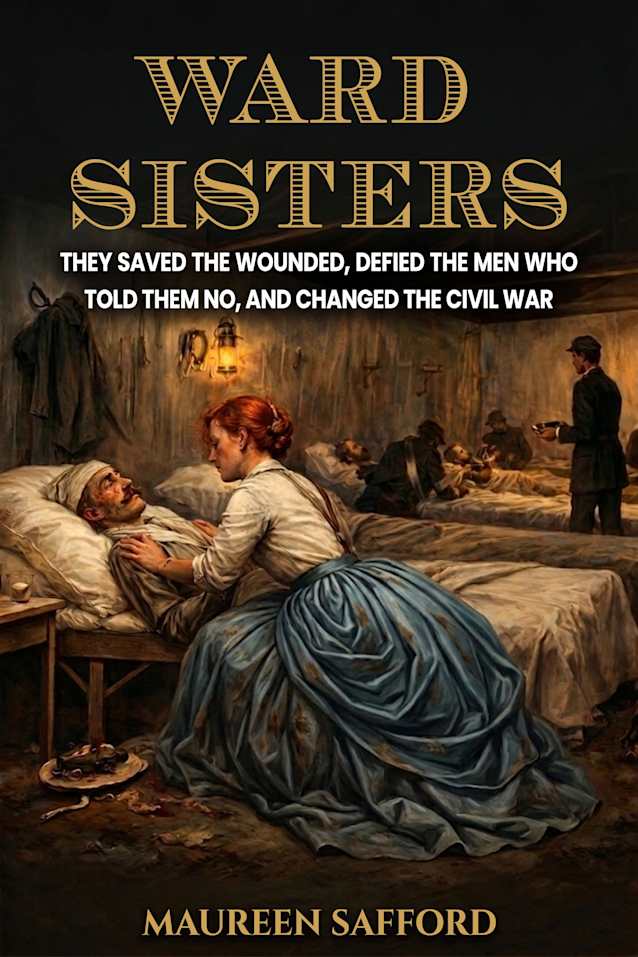
Ward Sisters: They Saved the Wounded, Defied the Men Who Told Them No, and Changed the Civil War (Women Between the Lines: Overlooked Lives That Shaped History)
About
The Civil War created a medical catastrophe that the United States was utterly unprepared to face, and women stepped in to save it.
As hundreds of thousands of wounded and dying soldiers flooded overcrowded camps and makeshift hospitals, surgeons and nurses faced disease, amputations, and death on a scale the nation had never experienced before. Women became essential to holding the system together. Disease killed more men than bullets. Surgeons amputated limbs by the thousands. Infection swept through wards thick with blood, gangrene, and human waste. Into that chaos stepped women who were never supposed to hold authority inside military medicine.
They cleaned infected wounds. Managed overflowing hospital wards. Wrote letters for dying soldiers. Fought bureaucracies that refused to recognize their labor. Some died from the very diseases they treated.
Ward Sisters tells the story of the nurses, civilians, doctors, freedwomen, and relief workers who kept the war’s inadequate medical system from collapsing entirely. Following figures like Mary Ann Bickerdyke, Clara Barton, Cornelia Hancock, Susie King Taylor, Phoebe Yates Pember, and others, this gripping narrative reveals how women moved far beyond the sentimental image of “angels of mercy” and became organizers, administrators, supply coordinators, sanitation reformers, and indispensable medical workers operating at the center of a national crisis and how many spent decades after the war fighting for pensions, recognition, and the right to have their service remembered at all.
The Civil War turned churches into hospitals, homes into wards, and ordinary women into the backbone of wartime medicine. From Gettysburg field hospitals and Confederate prison wards to hospital ships, refugee camps, arsenals, and the birth of the American Red Cross, Ward Sisters uncovers the hidden history of the women who helped build modern American medicine in the shadow of industrial-scale death.
This is not a romantic story of wartime heroism. It is the story of exhaustion, bureaucracy, resilience, and the women whose labor saved countless lives while reshaping the future of American healthcare itself.