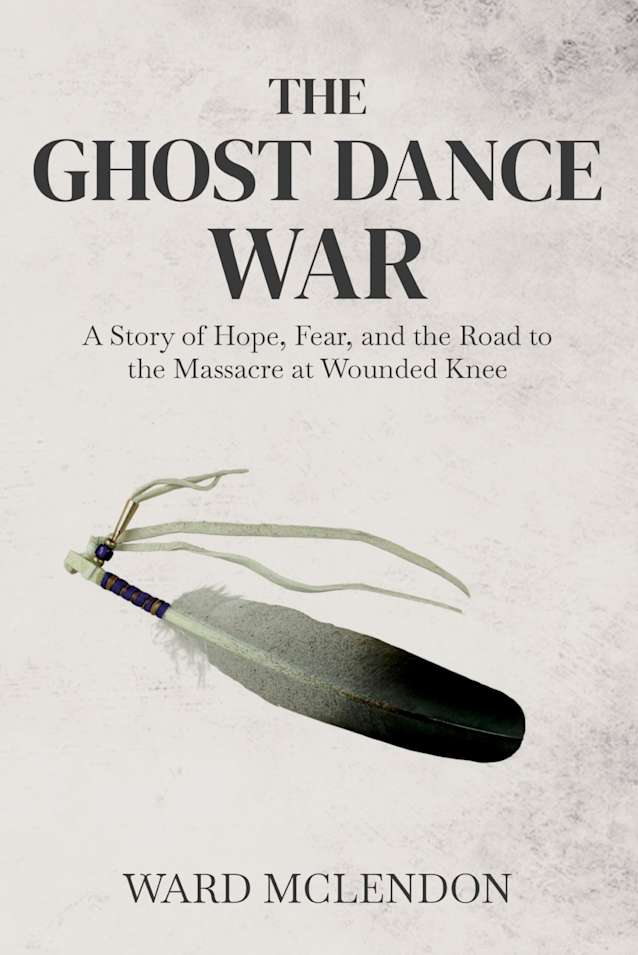
The Ghost Dance War: A Story of Hope, Fear, and the Road to the Massacre at Wounded Knee (American Frontier Chronicles)
About
A peaceful ceremony. A nation in fear. A tragedy born from misunderstanding.
In the winter of 1890, the Ghost Dance swept across the Plains. For the Lakota, it was a sacred prayer for renewal after decades of starvation, broken treaties, and the suppression of traditional life. To the United States government, it looked like the spark of an uprising.
The Ghost Dance War reveals how a spiritual movement rooted in hope was transformed into a national crisis—driven by fear, political pressure, and profound cultural ignorance.
Through vivid narrative history, the book traces:
Wovoka’s vision in Nevada and the spread of his peaceful prophecy
The diverse ways tribes interpreted the Ghost Dance as grief, ceremony, and survival
The federal panic fueled by newspapers, agency reports, and policy failures
The killing of Sitting Bull, which turned fear into open crisis
Big Foot’s desperate flight toward Pine Ridge in the bitter winter
The encirclement of an unarmed Miniconjou band by the U.S. Army
The massacre at Wounded Knee, where misunderstanding became catastrophe
Drawing from firsthand testimonies, Indigenous oral histories, and modern scholarship, this book reframes the Ghost Dance not as a rebellion, but as a coherent religious revival emerging from profound historical trauma.
Clear, compelling, and meticulously researched, The Ghost Dance War offers a new understanding of one of America’s most tragic and misinterpreted events. It restores human complexity to the people who danced for hope—and reveals how fear can turn spiritual movements into flashpoints for violence.
Perfect for readers of Bury My Heart at Wounded Knee, Empire of the Summer Moon, and The Heartbeat of Wounded Knee, this is a definitive narrative history of the winter of 1890—and the lessons it still holds today.
Praise for this book
I always knew that Native American tribes were treated badly and, in some cases, worse by the American Government during westward expansion. I never knew quite how badly until I discovered a book called Killers of the Flower Moon. As I was reading that book, I was horrified by how badly the Osage Nation was treated, all in the name of greed. They were dispossessed of their land, murdered for their money, and continuously deceived.
I recognize that I’m writing a review of The Ghost Dance War, not Killers of the Flower Moon, but I see so many similarities between these stories that I felt the need to point them out. This book enlightened me about an atrocity that I had never heard of. I knew the name Wounded Knee but not the story. It is well written, clearly well researched, and by the time you read the last page, all you can do is scratch your head and ask why.
There is no understanding of man’s inhumanity to man, and this is just another sad case of it.
I highly recommend reading this book. It’s definitely an eye-opener.
Wovoka, Sitting Bull, Big Foot, and the countless unnamed Lakota men, women, and children are portrayed with care and dimensionality, revealing a tragedy born not of malice alone but of profound misunderstanding and national panic. McLendon writes with clarity and restraint, allowing the facts and voices of the era to speak for themselves. The result is a powerful, necessary narrative—one that deepens our understanding of Wounded Knee and the devastating consequences that follow when fear is allowed to shape policy.
I was little during WWII, and held a childish belief that America could do no wrong, a belief that has crumbled over the years. During a read of The Ghost Dance War, many of the remaining crumbs were smashed to smithereens. I wept when I read how our country murdered the Lakota Indians at Wounded Knee Creek, and called it a war. This war was based on a misinterpretation of the Ghost Dance, a spiritual dance thought to foretell a violent indian uprising. The writing is eloquent, and though it is not poetry, it feels like poetry. I will remember this book for a long time, maybe always.
The Ghost Dance War is beautifully done. The book offers a contemporary retelling of one of America’s most tragic events: the massacre at Wounded Knee. After decades of silence and cover-up, the Lakota voices are finally heard loud and clear in this page-turning narrative. The political fear and confusion surrounding the event are tragic yet remain an important part of American history. It really stayed with me. I hope that this is being taught in schools today and not the military's version! I highly recommend it.
The events leading up to the massacre at Wounded Knee are so tragic and yet still compelling after more than 125 years. I hope this narrative is being shared with today's educators, too, because the old version of events is very inaccurate. I felt so much empathy for the Lakota and other Native Americans who were displaced during westward expansion, and how our government did not make the best choices back then. I think it's important that the truth of events be shared, and this retelling of the ghost dance and its role in the events at Wounded Knee is a good first step towards making that truth better known. Recommend.
If you are a history enthusiast or would like to learn more about the Ghost Dance and what happened in the winter of 1890, you will surely enjoy this read. The book is written by a knowledgeable author who studied and examined a religious revival in detail, rather than as a crisis or rebellion. I enjoyed that Mr. McLendon treated his writing about such a sensitive topic from an Indigenous perspective, and he has not tried to romanticize this movement.